“EXPLORING THE HUMAN CONDITION”: IN CONVERSATION WITH DIS FIG
TEXT: SHILLA STRELKA, PHOTOGRAPHY: PHILIPPE GERLACH
You’re going to present your latest release “What To Make of These Mortal Hands” at Elevate Festival. The record has strong world-building qualities. You manage to create a sonic universe that is encapsulating and cohesive, even if the music itself is heterogeneous. Besides electronic sounds, we hear many acoustic instruments, ranging from accordion and piano to guitar and psaltery. There’s field recordings too, and your voice reveals its full range. We are entering different sonic environments, or “chambers” as the presstext puts it. Each one shifts a little, yet the record feels very homogenous. How did you approach these different scenarios, and how did you arrive at the overall structure?
Dis Fig: It’s following the idea of a womb. This is the homogeneous structure that you’re speaking of, or how I see it. For me, the womb is this whole ecosystem that can contain so many different phases of process, different textures, different chambers, different emotions, but it’s all still contained within this one world, this one ecosystem. I say womb because you can really feel itt. And that feeling also comes with connotations of nurturing, of something that’s warm. But I feel like this womb is quite expansive in what it contains.
To speak on the different genres and sonic worlds that are part of this record: for me, it’s just a natural inclination. I’ve never been very narrow, into one specific sonic world. I’ve always been interested in so many different things. I’ve constantly listened to a lot of different genres throughout my life and been influenced by many.
Also, I came up via DJing for a while before I started producing, even though producing was always the end game. I always liked the mix of many genres together, and I always thought that was more interesting. So I don’t know that it was such a conscious decision, like, “Okay, I’m going to make a doom track, and then I’m going to make a drone track.” It just naturally came about from what I felt in the moment, whether that was mood or the emotion of the track and what it called for, basically.
“QUESTION THE FULL RANGE OF WHAT IT IS TO BE HUMAN”
Your last record “Purge” came out in 2019, so that’s seven years ago, and you’ve obviously had quite a journey since then. You’ve been active in many collaborations, most prominently with The Body and The Bug. You were already a club DJ when you started out in New York, before you moved to Berlin. I think this whole trajectory explains how you arrived at this diversity of sound. You’ve always been interested in different styles and maybe also in how to connect them. But as a solo performer, you’re mostly known for leaning towards harder styles, and for a very confrontational, emotionally expressive way of singing. So diversity is part of your identity as an artist, but as a listener, I might have expected your next solo release to lean more in that harsher direction. Especially after your last record with The Body.
My basic question is how you created this dramaturgy between the tracks. That’s also what I meant by world-building. It’s not only that the record is very organic, or that we’re inside a cosmos that you describe as a womb. It’s also that these different styles relate to each other, often through polarities. You have the quiet parts and the harsher parts. For example, there’s the decision to make a spoken-word track with acoustic instruments and then have the next track move into power electronics. How long did it take you to produce the record?
Dis Fig: I actually worked on the record in quite a narrow time frame: it was all written from May until November of last year. So it was a very encapsulated, narrow point in time, which I think is why it seems to exist in this specific ecosystem, in a way.
Speaking of the diversity, or the dynamics of it: apart from natural inclinations, an intentional reason is that I really wanted to speak on, and also question, the full range of what it is to be human, of what we experience. That’s the joy and the grief and the anger, all of it. So the emotions, and also the styles of sound and the intensity, how it affects your mind or your body or your emotions, shift dramatically, because I think that’s how we experience life. It’s all overlapping.
I think that happens even more today, especially with how we consume information. We’re constantly overlapping all these emotions: humor, then anger and sadness, then humor again. Our current reality feels scatterbrained. I don’t feel like the album necessarily is that, but it goes through the waves of emotion as we do and reaches all parts of it. I think that’s the whole point of the album: to show how all of it is a part of us, what we feel and what we make. It’s not just what we see from the outside, what others are doing. It’s all within us. So I wanted to transport us into this world where we go through it all.
“WHAT BOTHERED ME MOST, AND WITH SUCH EXTREME INTENSITY, WAS THE STATE OF THE WORLD”
I think you really achieved that emotional bandwidth you talk about. There’s such a wide range of feelings on this record. I think one big strength of your artistic work is how you handle intensities, both emotional and physical: the way we are really affected by music and sound. That comes through especially strongly on this record.
But for me, the overall atmosphere of the record, and this also relates to the title, What to Make of These Mortal Hands, isn’t necessarily hopeful. It’s more on the resigned side. I’m wondering what triggered you, to start writing the record after this seven year hiatus? Was it the world around us, the politics? To me, the title communicates a question of agency. How can we act, and what is our impact on this world?
Dis Fig: I think you got it. Yeah, I think you got it pretty on point. To take it back to what Purge was about versus this record, I feel like Purge was a very personal thing that I was trying to reckon with. This one’s personal too, but I guess that one was dealing with some specific personal issues. But while I was thinking about this new record, what bothered me most, and with such extreme intensity, was the state of the world. I think everyone is feeling this, everywhere. I was really trying to understand the psychology of it.
Generally, the psychology of humanity and the good and the really, really terrible as well. And how it could stem from the same source of DNA. And yeah, and I just wanted to take a very open approach to it in a nonjudgmental way. So I guess my question of what to make of these mortal hands isn’t so much ‘How do we save humanity?’ or ‘How do we change the world?’ We are born with the full range of humanity’s capabilities. It’s more about honing in on ‘What do I do with that?’ It’s a lot to carry. What do I do with that?
I feel this translates into the emotional frequencies we tune in to. There’s tenderness in some parts and brutality in others. It’s a spectrum of emotional qualities. You don’t limit yourself to one style or genre but you play the whole range. I imagine you also drew on everything you’ve gathered over the past seven years, including your encounters with the artists you toured and recorded with. Both acts, The Body and The Bug are known for their very physical, visceral approach. I think those elements were already present in your work before you met, but I imagine your bandwidth expanded and you integrated that.
Dis Fig: Yeah for sure I think I was inspired, but also able to get an inkling of the process behind it too. Not necessarily how it’s produced or whatever, but the simple fact of just using amps and reamping things, which is something that before, as a laptop, Ableton self-taught producer, I, one didn’t have access to, and yeah, two just didn’t know that’s how you can acquire these sounds.
Part of why it might sound closer to The Body material is that I worked with Seth Manchester, who engineered that record. He’s their mixing and recording engineer, and he’s also worked with BIG|BRAVE. He’s responsible for a lot of that sound. After that record I thought: if the next one I do is a solo record, I want to work with him. That was very intentional. I made everything myself. I produced it, recorded it, all in Ableton, digitally. But I always knew I would take it to Seth to mix it and reamp it through analog gear, to push it further into the realm I wanted.
That’s also why I think the record sounds quite interesting because it’s not just analog warmth or analog distortion. There’s a lot you can hear that can only come from digital, like digital distortion and digital noise. So the sound actually goes through three layers of noise, or of pushing: first me and everything I do in Ableton, then Seth and everything he does analog in the mixing session, and then Heba Kadry, who did the mastering and also runs it through analog gear. So it was a very delicate crafting of these distorted sounds. I’m pretty proud of what we did, because it took a lot of care to shape this destruction grain by grain, so that it holds its structure even as it’s crumbling.
“TO WRITE MUSIC FROM A FIRST-PERSON PERSPECTIVE”
Yes, and it’s a very tactile noise. I can really sense its haptics. And even though you create almost cinematic scenarios, the world you build feels introspective. As soon as I enter it, I find myself looking inward, at the emotional layers I’m moving through. As a listener, I feel very opened up. in a way that we’re looking towards ourselves and how we are going through emotional different layers.
Dis Fig: That’s really nice to hear. I do wonder whether it feels cohesive. It does to me, because it’s my world, so it’s always good to hear that other people feel it too.
What you said made me realize something – I tend to write music from a first-person perspective. In the worlds I create, it’s not that the world is over there and you’re looking at it. You’re inside it, and it’s all around you, behind you, beneath you, above you. I think this is the first time I’ve realized that, which is interesting, because it’s a through line in all my projects.
Right now I’m co-directing a short film with a friend, and a lot of it is framed in the first person too. That just felt natural to me, but I never thought about why. It seems that actually everything I make comes from a first-person POV. I think that’s why everything feels so visceral and so personal, even if the content and what I’m speaking about isn’t entirely a personal story. I’m guiding you through this world, through my attempt to understand it, but through a first person point of view.
I think it’s also because you come across as very real. Your expression feels authentic and direct. That brings me to your voice. I find it interesting that you started out singing in a choir when you were young. Your range is broad, but on your recent work your voice is very expressive, outgoing, confrontational and harsh. How did you get from choir singing to your expressive singing style? Was it a gradual development, or did you reach a point where you knew you wanted to express yourself that way, to really feel yourself?
Dis Fig: Well yeah, between my choir days, as a child and teenager, and the point where I came back to my voice, there was a break of about ten years. Not singing always felt like a huge void in me. I’d always wanted to pursue it. I actually wanted to become either a choral director or a jazz singer, but music school just wasn’t affordable, so I dropped it for a while. Then I started DJing and thought, okay, now I can get back into music, maybe make music, and maybe one day sing again. That was right before PURGE. That’s when I found my voice again.
By then my taste had become a lot more experimental since in my childhood days, and so I approached it with this aim to explore because my voice had changed so much – my range, the tonality. It got a lot huskier from smoking and shouting in bars in my twenties. I knew that I didn’t want to make choral or traditional music, so I approached it as a process of discovery. I knew how to sing more popular, traditional styles, but I didn’t know how to make strange noises in my throat. I liked experimenting with music, so I thought let me experiment with this other instrument too, one I’ve known since I was young but never really experimented before.
But you also never stopped experimenting with it I feel because also with this record there’s tracks where I’m really feeling that you’re pushing yourself, to stretch your limits and really try something new and never stop with being within the range that feels just comfortable to you.
I don’t think I’ll ever stop. I’m so curious about what this throat can do. I don’t know if you’ve seen this kid on Instagram, maybe he’s on TikTok too, but I’m not on TikTok. He can replicate hundreds of bird calls perfectly, and other animals too, and he knows all the facts about each bird. That blew my mind. I thought, I didn’t know we could do that. He has the same kind of vocal cords as me, so I can do that too. I don’t know if I’ll ever get there, but it means the possibilities are endless.
I grew up playing a little piano, but I’m not very good at it. There’s no other instrument I’m skilled enough at to really explore within perfecting it or whatever. So the voice is my instrument, and I feel lucky and grateful that it is, because for me it’s the most human instrument. It’s the one that comes from ourself. It’s the one we exercise all the time to invoke or evoke emotions, whether they’re coming out of us or we’re trying to get from other people.
I feel like the human voice is so powerful and has so much range. For me, exploring its full range is connected to exploring the full range of human emotion and the human condition. The two go hand in hand. I find I can express more through experimental, non-traditional use of my voice. So yeah, it’s something that I totally plan to continue.
Also writing music, doing everything in Ableton, on a computer, has gotten easier over the years, but it’s still very difficult. You have to go through so many hoops just to get one sound you have in your mind. But the voice comes out so naturally. So using that as a composition or writing tool for just your ideas that are in your mind, it’s just so much more fluid, natural and intuitive.
“EXPLORING THE FULL RANGE OF HUMAN EMOTION AND THE HUMAN CONDITION”
“THE WILL FOR INTENSITY WAS ALWAYS WITHIN ME”
What led you in the beginning to these more extreme sonics? Did you start with club music and then you went into more harder styles to DJ and then you came to noise, industrial music, power electronics, and metal or was it more like a social thing? How did it happen?
Dis Fig: If we take DJing as the starting point, then yes. But before that, as a kid, I was really into guitar music. I find these questions so hard, because I was into so many things: guitar music, hip hop, R&B, even Broadway shows. But I guess what I mean is that the will for intensity was always within me, from when I was a kid. Energy-wise, it’s always been there. Maybe I just hadn’t found the specific ways of expressing it that I have now, and I’m still trying to figure that out. But even growing up listening to nu metal, it was always in me.
I discovered electronic music when I became a DJ, or shortly before. So it seems as if electronic music and DJing were the genesis of it all, but they were only one part of it. Even before electronic music, I had lots of roots in metal. Maybe not the metal I listen to today, but bands like Korn, System of a Down and Static-X were definitely influential.
For me, it’s the idea, or the physical sensation, the will to headbang. And also just to scream. That rapid energy. It has been in me since I was a kid. Maybe it has just been expressed through softer music because I didn’t know heavier music back then, but I was maybe always searching for it.
I’m very interested in how people find their way to these harsher styles. To me, noisier genres carry a moment of dissensus, a moment of breaking free from convention. And I feel there’s always a moment of initiation, something that draws us towards these sounds, because they carry such a countercultural charge.
Yes. I don’t know if there’s any specific moment when I heard a thing and thought. As a kid growing up in the 90s and watching MTV constantly or whatever, you had the polarity of watching Britney Spears and then seeing crazy, noisy metal stuff on there. And the funny thing is, at that time, I listened to both. Even though one probably hated the other. But, yeah, I think always was searching for something that was different. Something that was going against the grain.
You referred to it as intensity, I think that was a good word to use. I think that you’re just looking for intense styles?
Yeah, exactly. I think at the end of the day it comes down to your own self outlet. And, as a teen, I wanted and needed something to release all the stuff I was feeling.
Still you need it!
Oh my god, yes! But I’m so glad I found it back then, to keep that with me and build on it. It’s always been with me. What changed is having the space and time to express those things, and wanting to. It makes me think of an Instagram infographic I saw. I didn’t fact-check it, but it said studies show that people who were emo kids are actually much more emotionally mature and stable as adults. And I thought, yeah, know what? I’m going to believe that.
I’m going all over the place, but this also links to the idea that many of the people who make the heaviest music are actually the kindest, sweetest, jolliest people. Take The Body, for example. They make such nasty, dark, filthy music, and the lyrical content, all of it is fucked. But then when you meet them, they’re the most jolly, friendly, lovable guys. And I feel so thankful that I have this outlet to express the darkness of whatever I’m going through, or whatever we’re all going through, because we need that. And honestly, I think about this quite often, about how I feel really bad for people who don’t have it, because I don’t know how they deal with it. I’m trying to provide a space that is, I hate to say “safe space”, because it’s so overused these days, but a space where it’s safe for us to engage with these emotions and still come out of it okay.
I think catharsis is one of the main effects of such a concert. I can imagine checking this stuff live and then I go outside and I feel cleansed. I lived through something and I lived through it together with the community as well.
Dis Fig: Yes, that’s exactly my aim, in the live performances and in the recorded music too. I need it myself, and I’m trying to share it with everyone else who needs it and is willing to take that leap with me into this world.
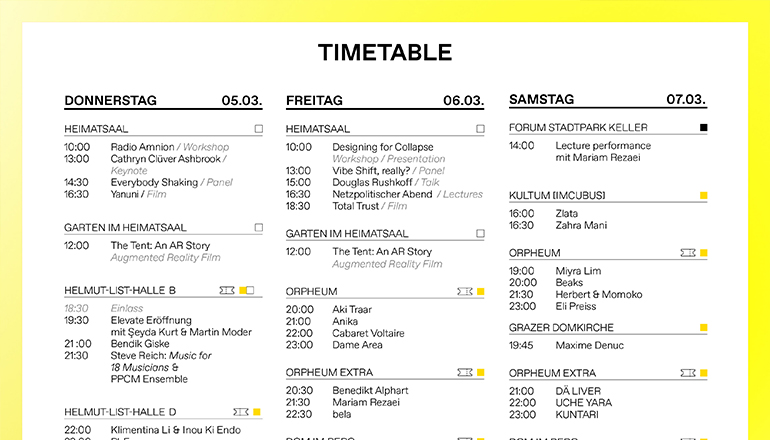
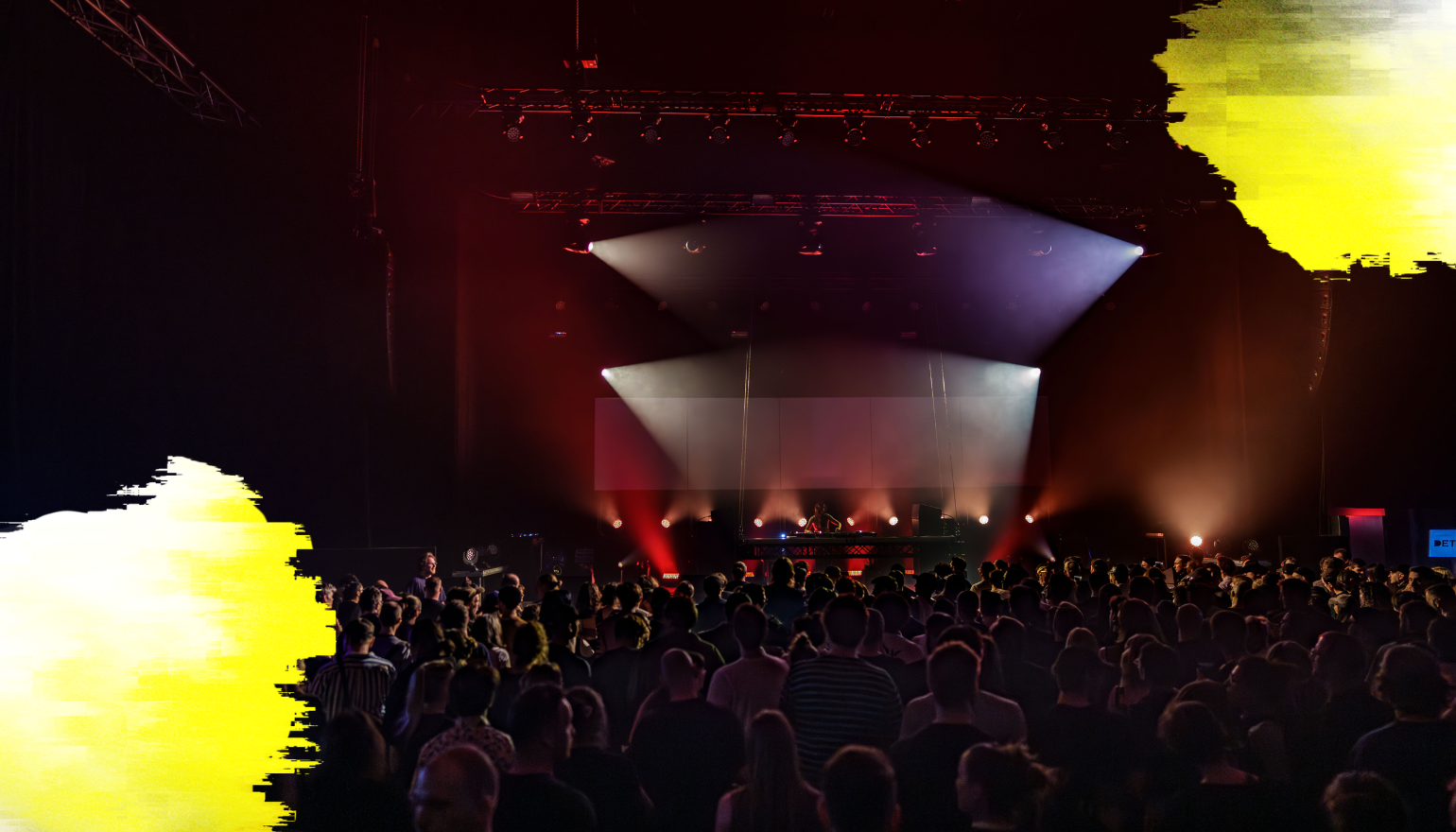
We’re already excited to welcome you at Elevate Festival in Graz next March. Have you been to the festival before? What can we expect of your set? I heard that Fitnesss is going to join you on drums on that tour which is great! I guess it will get pretty energetic.
Dis Fig: I’m super excited to come to Graz for Elevate Festival. I spent some time in Graz about eight years ago, rehearsing for two weeks and performing inside the cave in the mountain, and I really liked it. So I’m excited to come back, especially for Elevate. I’ve never been, but I’ve heard great things about it.
You can expect the album in a much more expanded form. One reason is that Fitness will be joining me on drums. The record wasn’t written with live drums in mind, so adding them expands it in a way I never imagined. The sound on stage will be very full and energised. If you’ve ever seen Fitness perform, you’ll know we look for the same thing in a live show, so I think the synergy on stage will be something really special. I’m so excited to come and play, and to start this tour.
Thanks much!