Arts Guide
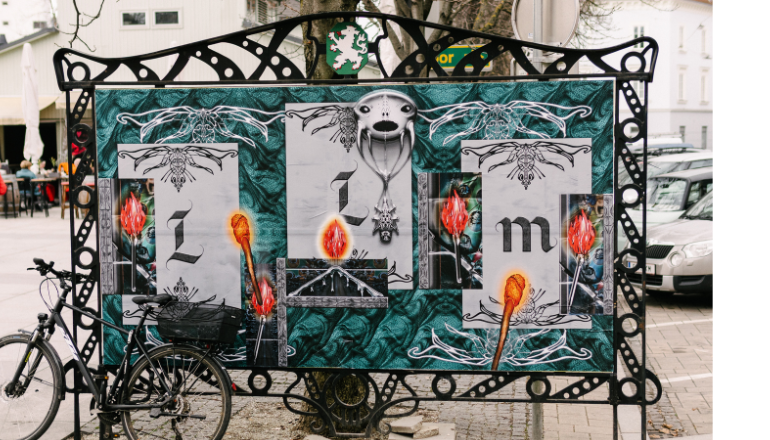
"Vital Signs" in Public Space - Florian Pfaffenberger © Zanshin Kuge
From neo-surrealist painting to hyperreal graphic design, from post-internet tableaux to neo-romantic photography: Vital Signs is a group exhibition in the urban space of Graz, presenting a total of eleven positions of contemporary artistic practice on culture boards, vacant buildings, and public light poles. The artists translate personal experience, subcultural and pop-cultural codes, and political attitudes into striking works that reference the festival theme. The exhibition deliberately moves between disciplines and reveals the fragile, emotionally challenging condition of our present.
Kristýna Kulíková’s collage-like visual language is inspired by heavy metal typography and manga aesthetics. The Prague-based artist collects visual fragments from pop culture, fashion, and music, assembling them into new, imaginative compositions. Her works resemble digital stage sets—visually activated mood spaces that operate affectively rather than inviting primarily analytical readings.
Based in Budapest, Gergo Kovács has for years navigated the space between fine and applied art and is strongly influenced by post-internet and new aesthetic discourses. His works draw on subcultural imagery, retro aesthetics such as Y2K, and internet-based phenomena, translating them into a distinct, often speculative design approach.
A similarly dreamlike, post-digital visual language can be found in the work of Florian Pfaffenberger. The Vienna-based artist combines neo-surrealist painting and post-internet art into detailed, playful scenes that unfold between dream sequence and everyday observation.
Surreal inspiration is also evident in the paintings of Omar El Sadek. In introspective self-portraits and portraits of others, the Prague-based Egyptian multidisciplinary artist and music producer captures emotional states. His colour palette is rich and dramatically expressive, forming a sensitive statement on the present and the fragility of our existence.
With painter Evelyn Plaschg, the exhibition includes a position that renders the emotional condition of a generation particularly tangible. Known for intimate, corporeal depictions, Plaschg has in recent years undergone a marked shift towards abstraction. In classical oil painting, she creates a world in dissolution—suspended between beauty and threat.
Currently based in Vienna, German-born photographer Neven Allgeier directs his gaze towards the emotional landscapes of Generation Z. His photographs combine sensitive portraits of young people with landscapes and urban environments. Fatigue, vulnerability, and quiet defiance coexist closely. Allgeier’s images are tender yet precise, oscillating between nostalgia and dystopia without ever exposing their subjects.
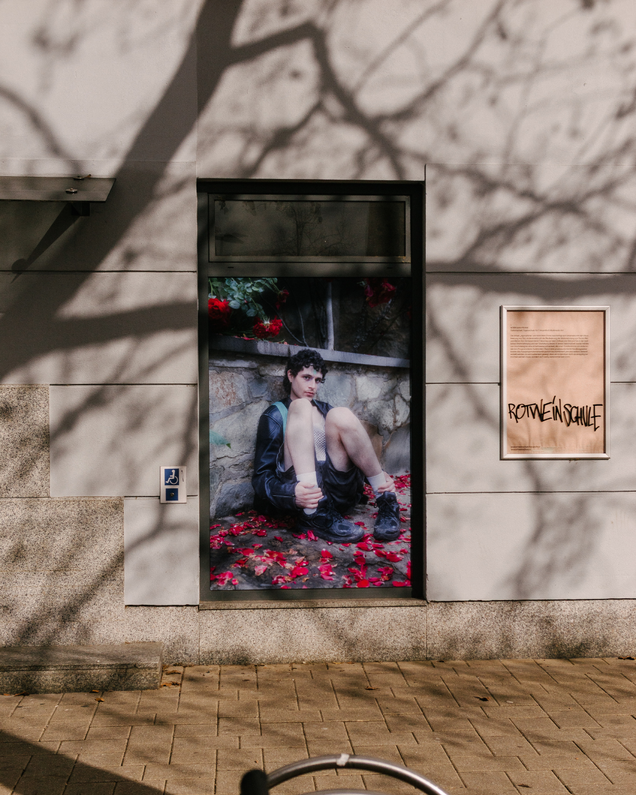
Philippe Gerlach works more directly from his personal environment. The photography of the Berlin-based artist resembles a visual diary, documenting friendships, love relationships, and subcultural scenes. Immediacy is more important to him than formal perfection. Gerlach’s works operate at the intersection of documentation and art, conveying an uncompromising honesty and closeness.
The Vienna-based photographer Anna Breit also frequently focuses on people from her immediate surroundings. Her work is characterised by a high degree of trust and empathy, for instance when portraying young people in their private spaces. Breit consciously reflects on power relations inherent in the gaze. Her analogue working process expresses a longing for authenticity in the digital age.
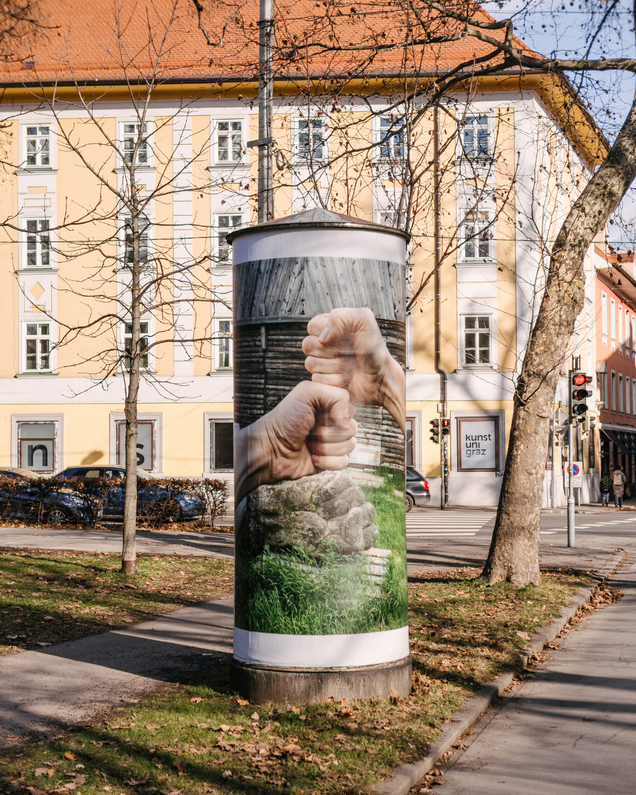
A different focus is set by the Styrian duo zweintopf. Through interventions in public space, they draw attention to the everyday and the overlooked. With subtle gestures, humour, and a poetics of the trivial, they create moments of pause and question routines of urban perception.
An explicitly political and ecological accent is provided by internationally renowned artist Oliver Ressler. His work Property Will Cost Us the Earth is installed on the glass façade of Forum Stadtpark and addresses the destructive effects of ownership and exploitation logics on ecological systems.
The exhibition is rounded off by a text intervention on the BIX media façade at Kunsthaus Graz by Graz-based author Nava Ebrahimi. Through a reduced literary contribution, she condenses political and linguistic questions and opens the local context of the exhibition to global perspectives.
Locations "Vital Signs in Public Space"
Anna Breit + Neven Allgeier + Philippe Gerlach - Lendplatz 39
Evelyn Plaschg - Volksgartenstraße 30
Florian Pfaffenberger - Lendplatz 45
Gergo Kovacs - Kaiser Franz Josef Kai 26 - 50
Kristýna Kulíková - Franz Graf Allee / opposite the Opera house
Nava Ebrahimi - Bix Medienfassade Kunsthaus
Oliver Ressler - Stadtpark 1a, opposite the Forum Stadtpark
Omar al Sadek - Geidorfplatz
Zweintopf - Erzherzog Johann Allee / corner of Glacis
"Elevations"
The French composer and musician Maxime Denuc, based in Brussels, presents Elevations, an installation developed in collaboration with artist Kris Verdonck. The work consists of a computer-controlled organ instrument with individually controllable pipes. Elevations weaves an immersive sonic field in which acoustic and electronic elements become indistinguishable. Inspired by 1990s dub techno and hauntology, light, movement, and machines operate autonomously, evoking the atmosphere of a reverberating afterparty.
Elevations is realised in cooperation with the KIÖR – Institute for Art in Public Space Styria and is freely accessible throughout all festival days.
Elevations (in collaboration with Kris Verdonck)
Concept & Composition: Maxime Denuc
Scenography & Dramaturgy: Kris Verdonck
Organ Building: Tony Decap, Seppe Verbist – pipes by Manufacture d’orgues Thomas
Computer Programming: Xavier Meeus, Centre Henri Pousseur
Lighting: Daniel Romero Calderon
With thanks to: Harry Charlier, Yves Rechsteiner, Andre Thomas, Kristof Van Baarle
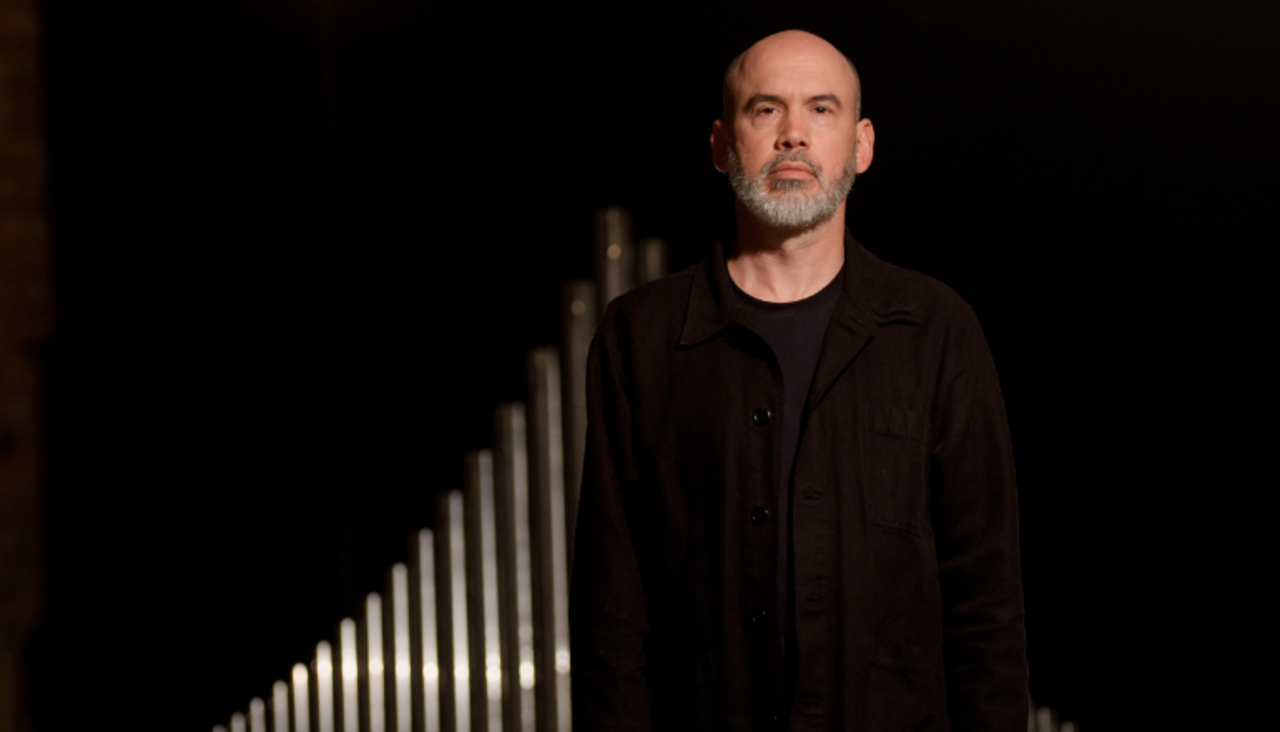
"Music for Elevators"
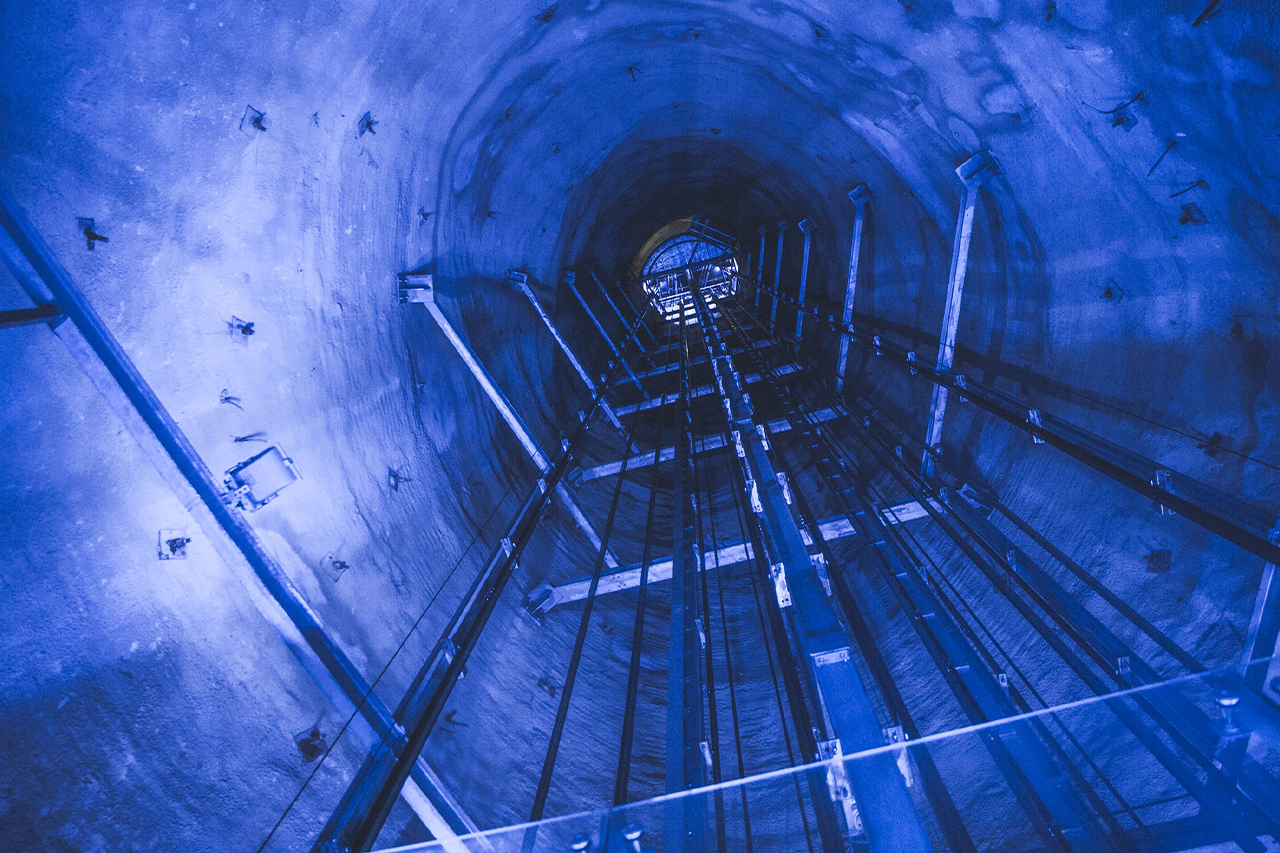
The Music for Elevators series has by now become a fixed component of the festival programme. Each year, a sound installation by a selected artist is premiered in the Schlossberg lift. The journey through this liminal space becomes an associative experience that, even if only briefly, stimulates the imagination. In previous years, compositions by renowned artists such as Suzanne Ciani, Brian Eno, Caterina Barbieri, and Dorian Concept accompanied visitors throughout the year in the glass elevator.
On the Friday of the festival in 2026, the newly commissioned work for the Schlossberg lift will be unveiled. This year, the lift installation is created by Maxime Denuc.